
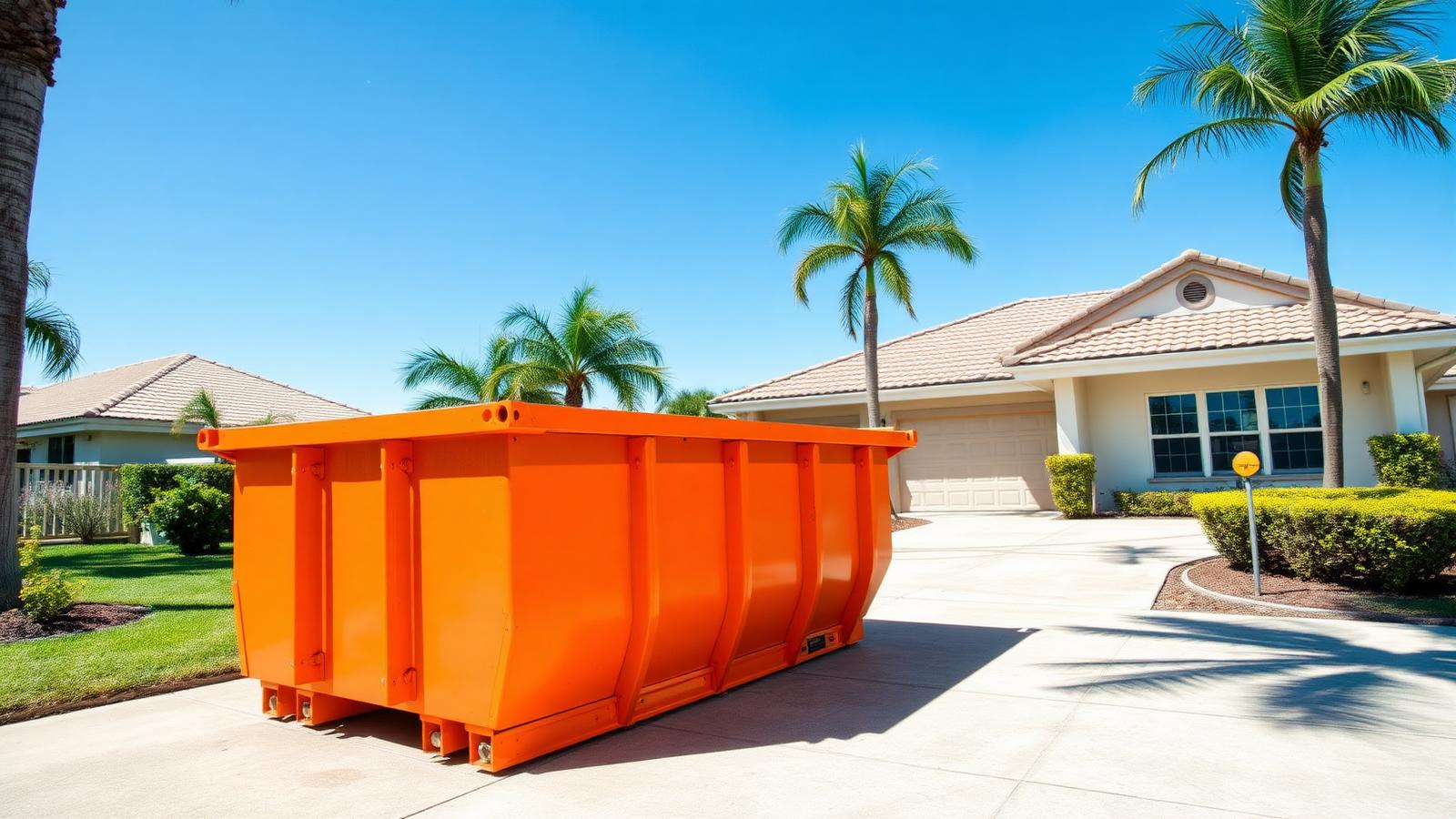
10 Yard Dumpster
- Dimensions:
- About 12 ft long x 8 ft wide x 3.5 ft high
- Capacity:
- Roughly 3 to 4 pickup truck loads
- Estimated range:
- approximately $300-$500
Single-room cleanouts and small garage clearing
Check local availability and estimated pricing for roll-off dumpsters across Florida. Enter your ZIP code to get started.
Enter your ZIP code and project details so local dumpster availability and pricing can be checked for your area. No obligation.
Roll-off pricing in Florida depends on your ZIP code, the container size, the type of debris, the rental period, the included weight allowance and local disposal fees. Two neighboring counties can differ simply because their landfill tipping fees differ.
| Dumpster size | Estimated market range | Common use |
|---|---|---|
| 10 yard dumpster | approximately $300-$500 | Single-room cleanouts and small garage clearing |
| 15 yard dumpster | approximately $350-$550 | Medium cleanouts covering several rooms |
| 20 yard dumpster | approximately $400-$650 | Whole-home cleanouts |
| 30 yard dumpster | approximately $475-$750 | New construction and large remodels |
| 40 yard dumpster | approximately $550-$850 | Commercial construction and large demolition |
These figures are general market estimates for Florida, not guaranteed prices, and they do not include weight overages, permits or specialty fees. Last updated: August 2026.
Five standard roll-off sizes cover nearly every Florida project. Volume decides the size for light debris; weight decides it for concrete, tile and wet roofing material.
Single-room cleanouts and small garage clearing
Medium cleanouts covering several rooms
Whole-home cleanouts
New construction and large remodels
Commercial construction and large demolition
Debris type changes the container, the weight allowance and sometimes the disposal facility. Choose your project to see the sizes and restrictions that apply.
Household cleanouts produce mixed, bulky debris: furniture, mattresses, boxes, closet contents and garage clutter.
Residential Cleanouts dumpster guideRenovation debris mixes drywall, cabinetry, trim, flooring and packaging.
Home Renovation dumpster guideShingles are dense.
Roofing dumpster guideNew construction and commercial build-outs generate steady, mixed C&D debris.
Construction dumpster guideDemolition debris is heavy and unpredictable.
Demolition dumpster guideConcrete, brick, block, asphalt, soil and sand are classified as heavy debris.
Concrete and Dirt dumpster guidePalm fronds, branches, hedge trimmings and sod are bulky and hold water.
Yard Waste dumpster guideAfter a named storm, Florida cleanup debris is mixed and often water-damaged: fencing, roofing, drywall, insulation, soaked furniture and heavy vegetation.
Storm and Hurricane Cleanup dumpster guideWe check availability statewide, from the Panhandle to the Keys corridor. Start with your metro area below, or enter your ZIP code to check pricing for your exact address.
Working on a job site, managing a property, or trying to understand what applies in your county? Start here.
Sizes, swaps, heavy debris and scheduling for trade crews across Florida.
Retail, office, warehouse and property-turnover projects with restricted access.
Estimated ranges by size, weight allowances, overage and permit costs.
Three steps, no obligation and no account required.
Tell us where the container is going. Florida disposal costs and hauler coverage vary by ZIP code, so this is the starting point.
Share the project type, debris, preferred size and target delivery date. Choose Not Sure if you want a recommendation.
We use your details to check what is available in your area and follow up with you. No company is assigned when you submit the form.
Rain adds weight. Florida's afternoon storms soak drywall, carpet, shingles and yard debris. An open container left uncovered through the wet season can gain hundreds of pounds, which is billed as weight overage. Tarp the load when heavy rain is forecast.
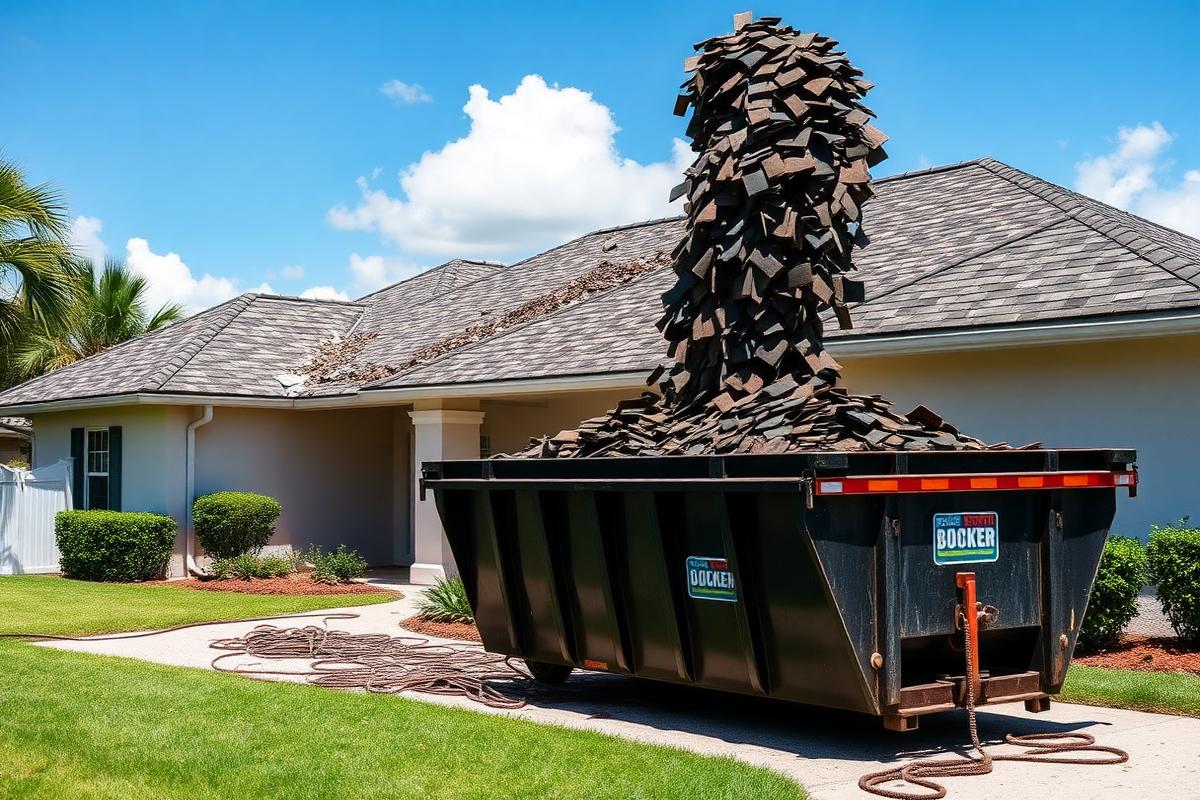
Roofing and hurricane cleanup. Roof tear-offs and post-storm debris are the two most common heavy-load jobs in the state. After a named storm, container demand across affected counties rises sharply and availability windows lengthen.
Street and right-of-way permits. Permitting is local. Placement on your own driveway usually needs no permit, while street or swale placement typically requires approval from the city or county with jurisdiction over the address.
Driveway placement. Paver drives are widespread in Florida. Ask for boards under the container rails, and check overhead clearance where oak or palm canopy overhangs the drive.
Heavy debris restrictions. Concrete, brick, tile and soil are almost always separated into a dedicated container. Mixing them into a general load is the most common cause of a rejected or surcharged haul.
Read the Florida dumpster permit guide or see storm and hurricane cleanup containers.
These are the twelve Florida cities with the highest dumpster rental demand. Each page covers local sizes, pricing factors, permits and placement.
Submit your ZIP code and project details and we will check local dumpster availability and pricing for your area.
Enter your ZIP code and project details so local dumpster availability and pricing can be checked for your area. No obligation.